
Embedding the B word.
im talking about banks

“It is well enough that people of the nation do not understand our banking and monetary system, for if they did, I believe there would be a revolution before tomorrow morning.” ― Henry Ford.

Banks, banks, banks, banks. For the longest time, perhaps since the Medici family’s rise to fame during the Renaissance, modern banking has remained largely the same and largely unscrutinized by its users. A bank was a physical place you had to visit when you needed to do something with your money beyond normal daily spending. Even after the internet, the structure remained largely the same: tellers moved to chat windows, marble buildings with drab carpet and monotone colors became apps, but all your money still lived there, with all of your financial life routed through that one node.
Want to have a good chunk of money in your checking account?
Bad news, pal, you won’t earn the risk-free rate on that!
Want to put idle capital to use and earn a yield on it?
Sure, open a savings account and earn 0.01% APY! (National average is 0.46%. Chase and the other major banks sit on the low end of that range.)
The hard truth is that these banks don’t want you to have access to the risk-free rate; they want your purchasing power for themselves. No one in the past thought about cash or lack of yield as an investment decision, but now people seem to be waking up to how much more they can earn.
T-bills offer at least 10x what these banks pay….
Now, lots of people have already written extensively about bank unbundling, and you often hear the same story about a wave of fintechs in the 2010s eating into banks’ features. Chime for checking, Wise for forex, Affirm for lending, SoFi for refinancing, and so on. They correctly identified that banks were horrible to mediocre at all things, and then built a company that was elite at ONE thing to take that flow away from the banks. The large mountain was stripped of its valuable ore, one by one, as consumers realized that banks were ripping them off left and right due to the lack of substitutes. I believe that the unbundling is largely reaching maturity, and that precious ore from the mountain is being reforged into “better” banks that aren’t banks at all.
I graduated from university in April at 20 (I tried to get out as fast as possible). During my time there, I noticed some fascinating financial consumer behavior. Students would often have 4+ apps each holding a slice of their net worth. Cash App for spending and paying friends, Robinhood for stock gambles or investing, DraftKings for some fun :), CreditKarma for loans, and many others. Most of them didn’t really use their bank, aside from it issuing the debit card that served as the intermediary between receiving a check and funding their apps. The key point here was that the bank was a means to an end for funding their apps. Most didn’t have anywhere near enough money to make a bank savings account worth it; 0.4% on 500 bucks in savings isn’t going to move the needle.
There seems to be a cohort of people who write off Gen-Z as just “poor, and financially illiterate gambling addicts.” Like, “yeah, of course, Gen-Z doesn’t use a normal bank, they are too busy trying to escape the permanent underclass!” This rhetoric is just moronic if anything, students and Gen-Z aren’t doing anything alien, they are simply responding to a structural shift in their world, a shift that affects everyone, not just Gen-Z.
The first component of this shift is that the cost of building, and especially building financial infra/fintechs, has collapsed dramatically. The execution tax of doing pretty much anything is zero. No more playing telephone with design or code teams, just you and your product.
At any other time in the past, if you were trying to build a consumer finance app and wanted to offer some form of savings account inside your product, you’d have to find a sponsor bank, sign a partnership over a 9 month negotiating span, build out an entire compliance team, and spend 8 figures in funds before launch hoping that regulatory shifts dont force your partner bank to nuke the agreement. Thus, financial features embedded in non-banking apps were usually found only in specific businesses that could justify the massive expenditure of time, capital, and talent (Stripe, Square, etc.). This dynamic has obviously shifted; banking-as-a-service providers can easily handle the plumbing via APIs, and tools like Plaid can make connecting your bank accounts to an app as simple as a sign-in. Perhaps most importantly, stablecoins have evolved as a worthy substitute rail to bypass the incumbent and slow traditional banking stack altogether. Things like the Tether development kit, Privy, Bridge, etc., all allow consumer apps to add a wallet in seconds. We have even seen Whop, the emerging and dominant creator marketplace, partner with Tether to build an in-house self-custodial wallet with built-in savings, all within Whop. Meaning you can earn on Whop, and directly save on those earnings at a rate 10x+ what you could at your normal bank.
Financial infrastructure used to be one of the strongest moats, switching costs with banks are notoriously high, and you NEEDED a bank to do pretty much anything. Now, financial infrastructure is a feature; you are no longer forced to keep your money only in a bank, and the friction of moving your money elsewhere is virtually nonexistent. I can move my money from my Chase checking account to Coinbase virtually instantly and start earning 4% instead of 0.01. Where people put their money today is no longer a function of how hard it is to escape or leave, but rather a function of where they want their money to actually be. For most younger generations, that means investing money in the places where they already are.
Money is downstream of attention.
The idea of the attention economy is just a repackaging of ancient philosophy. Matthew 6:21 in the Bible states, “For where your treasure is, there your heart will be also.” Highlighting that we can know a person’s greatest priorities and passions simply by following the trail of where they invest their time and capital. The inverse is also true: people spend the most time where they will eventually spend the most money (just ask your golfing or car buddies). For most of the past, this concept wasn’t very insightful because there weren’t many places where money could follow that attention. You could spend hours upon hours doing all sorts of things, but those places in the past could never hold or put your money to work other than just taking it. Therefore, the bank held your money because it was really the only place that could, unless of course you liked it under your mattress like a certain greedy crustacean.

The fact that the friction of moving money is basically zero now is what really enables our capital to follow our interests. As we have all unfortunately experienced firsthand, moving money the old way through banks is akin to being put in the iron maiden. ACH transfers take 3-5 business days; physical visits are required for wires, rendering electronic transfers obsolete, clunky old online portals that haven’t changed since Myspace was the top social media platform. I mean, just look at the webpage for Treasury Direct, the government’s very own website for buying T-bills…
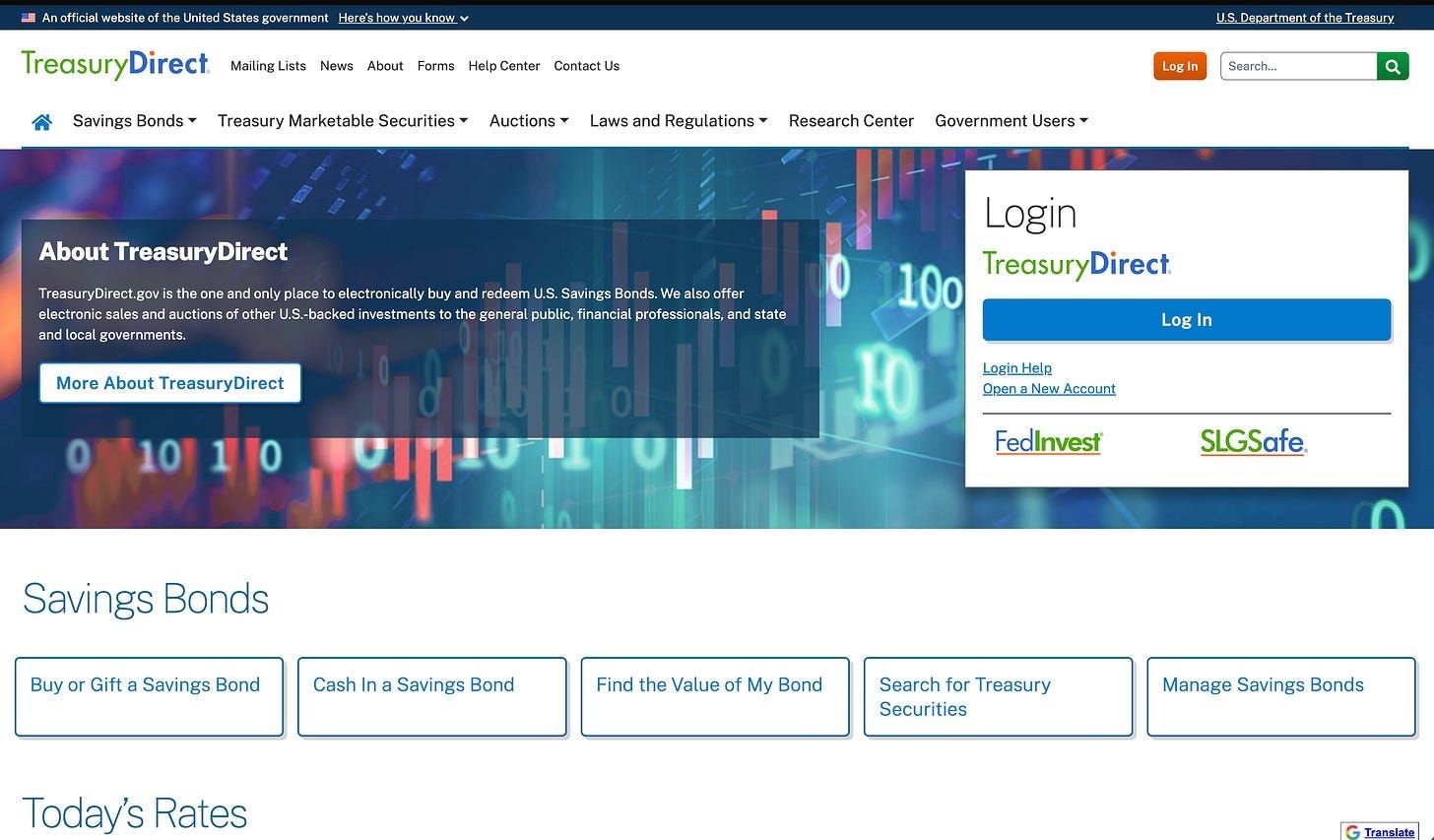
On top of these headaches, trying to get your money to work requires even more hurdle jumping, separate accounts with different brokerages required just to invest in a money market fund? Calling a rep or visiting a branch in person just to move a larger sum of money from checking to savings? Classic.
While everyone agrees unilaterally that these are an absolute pain, they put up with it because the cost of leaving the bank was higher than the torture of using it. Banks were thus able to only offer 0.01% APY because they knew you couldn’t and weren’t going to go anywhere else. Now, though, now that friction is obsolete. Instant payment rails are live (RTP/FedNow); Plaid can connect any application to a bank account through simple API authentication; stablecoins give you full ownership and democratized yield. Simply put, banks can’t trap you anymore. In fact, the very same malarkey they used to trap you with is exactly what makes it easy to leave now.
I think, for the first time in a long time, we are starting to see actual free-market competition in the banking/finance space. Banks pre-now were basically oligopolistic at the top end and could really do whatever they wanted, thanks to their sheer scale. They would then only have to compete for deposits, not for your loyalty. Now, however, they have to compete for your preference; they have no chance against Robinhood on stock access, Coinbase/Whop on Yield, or CashApp on UX. The funniest part of it all is that banks themselves can’t really fight back. A chartered bank under FDIC regulations with a huge payroll can’t ship any feature as fast as even the largest fintechs, nor would it want to, given the massive costs on the regulatory and compliance side. Granted, a large bank’s bureaucracy, slowness, and strict regulatory compliance are what make it safe.
That puts us in kind of a wild west standoff today, wherein the banks have all the capital, licenses, deposit base, and regulatory clearance. But the apps have all the user loyalty, shipping velocity, and ability to lose money trying out new features to vie for attention. Banks are hunting for deposits and regulatory moats to combat competitors, while apps are simply trying to improve their products to attract consumers more naturally.

Before moving on to my main point, I do want to say that, one, I don’t think banks should or will disappear necessarily. I think much of the writing so far on bank unbundling reads like a premature funeral party rather than forward-thinking. We all still use banks for the most part, and many new banks (Erebor, etc.) are genuinely trying to address pain points. Banks, the large ones at least, have been built and stress-tested to withstand massive financial shocks that would take out most fintech banking-esque products. I, for one, don’t think Robinhood should issue mortgages or that we should eliminate the very thing that helped contain fallouts like the 2023 SVB one. It’s easy to say, amid a largely bullish fintech/AI boom, that banks are unnecessary, but when trust inevitably gets tested, it seems it’s clear where capital will run. Thus, I tend to think more in terms of banks becoming one layer rather than the sole destination. The consumer-facing relationship with banks is largely shifting towards those apps, which still inevitably end up settling dollars with a bank somewhere. What changes is where consumers actually interact, with a clear shift away from the Chase app itself and towards consumer apps.
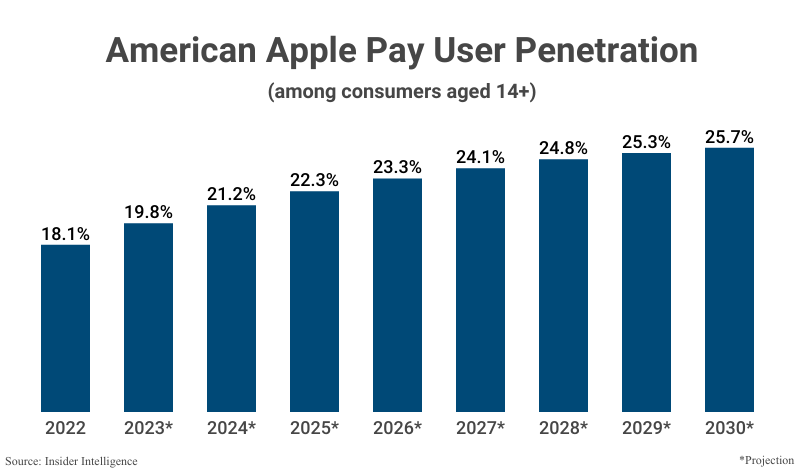
Now, the main point of all this yapping is that, in my opinion, the bank-unbundling era is largely resolved and/or over. Our current situation, where all new consumer fintechs, vibecoded experiments, and one-person comapanies are directly embedding banking features, will be the predominant driver going forward. I hate the “era” terms because they are too binary, but I’d say the “Embedding Era” is a more pertinent descriptor for today. Whop is no longer just a creator marketplace. It has essentially embedded everything a bank does. Robinhood isn’t the simple stock-buying app it used to be. It now offers yield, debit cards, and credit access. Even Apple has embedded tons of Banking features, with Apple Cash/Card/Savings having billions upon billions in deposits. I don’t really see this stopping anytime soon. Even when I vibe code fun consumer apps for my own tinkering, I can easily embed financial rails with simple lines of code. The bank can be a great firm foundation layer of safety, but it doesnt have to be the whole house anymore, nor are you forced to live in said house.
I could spill absolute article slop drivel about how “in the embedding era relationships are the new wedge, not products! Buy my paid Substack course! But that’s not my style. The idea that relationships are perhaps more important than purely products is not new at all. Just ask any car salesman from the 70s. Business has always been relational first and foremost, and while yes, a fantastic product can get you far, if you have a shitty relationship with your customers, then good luck! I also believe that many would fall into the trap, thinking that because you can embed banking so easily, you should do it ASAP. I think this is bologna. It seems to me that one has to earn the right to embed banking in their apps, and if they do it too early with no clear advantage, they risk pushing users away by trying to sell them too much while providing far too little. Apps today have the potential for extremely strong network effects, given how much of the population is online. With that said, just embedding some banking will lead to zero emergent behavior or improved LTV for the app. A crypto app that offers a neobank card after 3 months has no reason or advantage for users to switch from their existing cards. Robinhood had tons of people trading and earning life-changing sums on stuff like DOGE long before they offered a card (they also had a cult on Reddit). Whop had many creators earning 7 figures monthly before adding the bank plumbing. We all hate when people or apps try to sell us too much upfront; it feels fake and Dollar Tree quality-esque. (insert Jackie Chan I fear not the man quote)
That said, caution is warranted with all this stuff. FTX portrayed the idea that just because apps can have the semblance of an embedded bank (it operated as a shadow bank), doesnt mean they have the legal or structural necessity of one. We tend to conflate our idea of where our money lives with where it ACTUALLY resides. That mental disconnect is dangerous, as it leads many to believe their funds are safe in a consumer app that, in reality, is several layers removed from actual bank safety. This usually isn’t that big of a problem, but in the inevitable black swan event, such illusions spell trouble for your funds. This obviously increases tenfold in our current era, where AI-coded sites are becoming indistinguishable from real, safe ones. Cybersecurity and consumer protection are rising in value in parallel with increasing bank embedding.
To harken back to the opening quote by Henry Ford, he was not wrong about there being a revolution once people understood banks. It’s more so that the revolution has come in the form of competing technology rather than torches and pitchforks. The big banks have refused to move the needle on their savings, and the top-end high-yield savings accounts are offered by digital-first and digital-only banks. For the newer generation, 1,000 in savings in Chase earns 10 cents a year. Why would they keep their money there rather than move to Coinbase, keep it in Whop, or try their luck trading equities on Robinhood (Which, oh by the way, offers great yield on uninvested cash)?
The Medici family was able to run the dominant banking model for 600 years precisely because no viable alternatives existed. Even with the advent of the internet, the model remained the same. Money was stuck at a destination, and you were charged for the privilege of leaving money at said destination. The inherent opacity of how it actually worked was part of its allure and edge. Now, however, it’s finally being threatened by more viable alternatives in better places. Money is no longer stagnant. Money can follow your attention without losing a step.

The new generation is not financially confused, contrary to popular belief. They were just the first generation to grow up within the new regime. They have lived their entire lives with the bank as a layer beneath them, rather than the cornerstone of their financial lives.
“The future is already here – it’s just not evenly distributed.” ―William Gibson